Translate

Showing posts with label Pagan. Show all posts

May 12, 2026

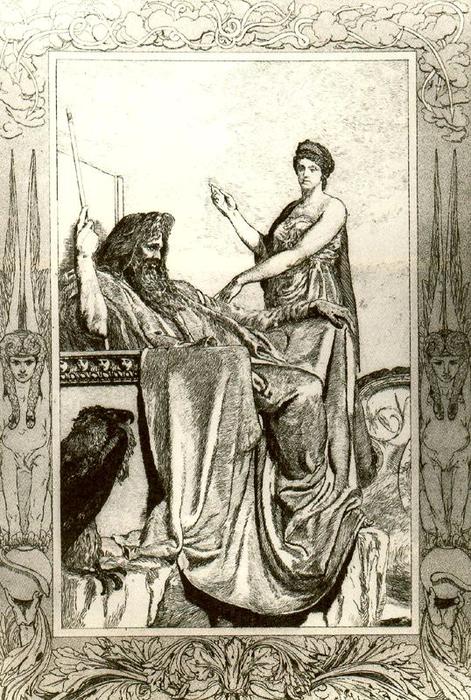
Athena Is Coming To Save Us From The Bullies of the World

In case you missed it, an "Exceptional Statue of the Greek Goddess Athena" was uncovered in Ancient Laodicea, Turkey.

That's right, archaeologists have uncovered a nearly 2-meter (6.6 feet) marble statue of the Greek goddess Athena at the ancient city of Laodicea, located in modern-day Turkey. Researchers found the statue lying face-down in rubble debris along the outer wall of the theater’s rear stage section, known as the “postskene.” The statue is carved from white marble, though its head has not yet been found.

As we know here at EsotericDaily.com, nothing is by accident or without meaning, and so I ask you these questions, "Why did a headless Athena present herself to us now?" "What does it mean."

First, Athena was one of the most revered goddesses in ancient Greece, associated with wisdom, warfare, and handicraft. She is traditionally depicted wearing a helmet and holding a spear, with snakes and the gorgoneion among her most recognized symbols. Unlike Ares, who personifies the bloodlust and violence of battle, Athena represents the disciplined and intellectual side of war—specifically strategy, tactical prowess, and heroic endeavor.

A quick refresher on myth, Athena was the daughter of Zeus and was known for her miraculous birth, emerging fully grown, in armor, and emitting a battle cry from Zeus’s forehead. In some accounts she was produced without a mother, and in an alternative story her mother was Metis, the goddess of counsel, whom Zeus swallowed while she was pregnant with Athena. Being the favorite child of Zeus, Athena had great power. In turn, she favored such mortal heroes as Odysseus, Heracles, and Perseus.

Now, esoterically speaking, here are the factors that present themselves to us:

1. Athena gives Perseus the power to face Medusa by instructing him not to look her directly in the eyes, but to use the reflection of his sword to attack her. Medusa, who could turn anyone into stone by looking at them, was the evil force trying to create chaos in the world. By giving Perseus the power to defeat Medusa, Athena is actually protecting the world from a selfish bully who wanted nothing but death, destruction, and chaos in the world. 

2. In another myth, Athena wanted new weapons, so she went to the blacksmith god, Hephaestus to request his services. When Hephaestus saw Athena he tried everything he could to forge a relationship with her, when she refused him, he lost control of himself and forced himself (yes, rape) on her. She fought him off, but not before he ejaculated on her leg. Athena wiped the nasty mess off herself and threw in on the ground where it turned into a snake: her snake-son Erichthonius.

3. Athens, which is named after Athena, is where western society began with the likes of Socrates, Plato, Aristotle, and where democracy was founded. Most myths with Athena show her as the champion of fairness, justice, and democracy -- just look at the face of the Statue of Liberty and compare it to the statues of Athena; conversely, many temples that had been dedicated to Athena were converted into churches for the Virgin Mary with the spread of Christianity, most notably, the Parthenon (the "Temple of the Virgin Athena") served as the Cathedral of Theotokos (Mother of God) for nearly a thousand years. 

Athena on the left, Mother Mary on the Right.

4. In The Eumenides, Athena shows up in the final play as the divine arbiter who ends a cycle of blood vengeance and establishes the foundations of human justice. Yes, the first courtroom scene ever written. 

Put these statements together, and we see that Athena is the goddess of human decency, fairness, and justice. Unlike the other woman in myths she doesn't need saving by a man, instead she uses her intellect to protect herself and others, and she remained a virgin. She brought order to the world with the Medusa story, then fairness and democracy to Athens, and as in the play Ajax, written by Sophocles, she intervenes to bypass useless killing by driving the bully leader, Ajax, mad.  

In conclusion, I believe Athena has popped up from the grave as a warning to the male leaders who are creating chaos instead of order. We know who they are, just look at the wars in Ukraine, Palestine, Lebanon, Iran, and the macho world leaders pounding their chest to drop more bombs, kill more people, and create more chaos.  

Enough is enough.

Athena is a hopeful message to those of us wanting immediate peace for the sake of humanity, and a warning to the war lords that bad things will start happening to them if they don't start playing nice; that is, once she finds her head. 

~~ Eso Terry 


May 2, 2026

World Labyrinth Day Disclaimer

This is my disclaimer, for I won't be able to join in a labyrinth walk today, but will be there in spirit.  

World Labyrinth Day (WLD) is an annual international event held on the first Saturday of May to promote peace, mindfulness, and celebration of labyrinths. Founded by The Labyrinth Society in 2009, thousands participate by walking a labyrinth at 1:00 p.m. local time to create a "rolling wave of peaceful energy" across the globe.

According to the WorldLabyrinthDay.org, every year on the first Saturday in May thousands of people around the globe participate in World Labyrinth Day as a moving meditation for world peace and celebration of the labyrinth experience. Many “Walk as One at 1” local time to create a rolling wave of peaceful energy passing from one time zone to the next, and there are additional ways to participate.

So why the "Labyrinth?"

A labyrinth combines the imagery of a circle and a spiral to form an irregular, meandering path toward a central location. The design has been appearing in caves, on coins and pottery, and as turf or stone structures from as early as the Stone or Bronze Ages.

Traditional labyrinths have the entrance/exit at the bottom, while a separate, radial style show the entrance/exit at the top. Prehistoric or ancient labyrinths may have been used in sacred dance and ritual. Roman labyrinths appear at the entrance of buildings which could have had a function of protection or been meant to symbolize a sacred path to deity.

Medieval Christian labyrinths appeared both in church entrances and on the sanctuary floors. Although their purpose is unclear, they could have been used in Easter rituals with penitents following the labyrinth on their knees or been designed as protection from demons. In India, there is a belief that labyrinths are the refuge of a trickster spirit and that the demon Ravana rules over labyrinths.

The first labyrinths, is found in myth of Minotaur, where Minos refuses to sacrifice a bull to Poseidon out of greed. The angry Poseidon punished the king by making his wife fall in love with a bull. The fruit of this union was the monster Minotaur, half-bull, half-man. Full of shame, Minos imprisoned the monster in a labyrinth – a word which comes from the Greek “labrys” and refers to the double axe – the symbol of the supremacy of the Cretan Mother Goddess. The deeper meaning of the labyrinth is associated with the feminine life giving force, the earth-bound instinctual nature of our bodies. The centre of the labyrinth is the goddess’s womb.

The power of nature and instincts, the Greek zoe, the sheer life force – this is how the ancients perceived the bull. Only a woman – Ariadne – knew the way around the labyrinth into its centre. It seems that this first labyrinth was designed to guard the darkest heart of nature and to keep its secrets from the solar, upper-world consciousness. Alternatively, it symbolized the fear of Minos, that is the ego consciousness, of the bestial instincts, which he tried to repress.

Interestingly, also in Christianity the labyrinths were constructed to worship Mother Goddess. The most famous example is the stone Labyrinth from the cathedral in Chartres. It is believed that originally it had the image of Minotaur in its centre, but it was later removed. Now the centre of the Labyrinth features the Mystic Rose, emblem of Mary on the one hand and the ultimate symbol of the Self and the union of the opposites on the other.

Some researchers make a point of differentiating between the maze and the labyrinth. Karen Ralls explains:

“A labyrinth eventually takes one to a Center. A maze does not, but has many twists and turns in its path, even the occasional “dead end.”

Those who walk the labyrinth do so to find inner peace, to meditate and find a way through silence to inner truth. Cirlot adds that at the centre of the labyrinth conjunction occurs between the conscious and the unconscious. Perhaps the seeming duality of the confusing maze and the orderly labyrinth can be reconciled by invoking human and divine perspective:

“From within, the view is extremely restricted and confusing, while from above one discovers a supreme artistry and order.

According to symbolreader.net:

"The maze, thus, seems to symbolize our human limited perspective, our entanglement in the world of the senses and desires, our getting lost, taking the “wrong” path, occasionally feeling lost and desperate." 

So brothers, sisters, and non-binary siblings, however you navigate through your labyrinth of life today, do so with a kind spirit, for we are all in this together regardless if we walk or not, 


~~ Eso Terry


May 1, 2026

May, Aleister Crowley, and the Esoteric Message of Nursery Rhymes

Hermes and Maia

May, the fifth month of the current Gregorian calendar and the third month of Spring's rule, which derives its name from the Roman Springtime goddess Maia, whose divine powers encouraged the growth of crops. 

Wooo, I have to stop here for Maia is also the mother of Hermes, and well, I have to go Hermetic on your ass now because we have invoked the name of Hermes Trismegistus which brings us to today's topic: The Holy Qabalah, Aleister Crowley, and Nursery Rhymes, for you see all nursery rhymes were holy before the Demiurge's Fake Religion of today.  


 So hold onto your seats boys and girls as we reveal one of the great secrets of the adepts.  

Old Mother Hubbard

Went to her cupboard

To get her poor dog a bone;

When she got there, 

The cupboard was bare, 

And so the poor dog had none. 

Who is this ancient and venerable mother?  According to Aleister Crowley she is none other than Binah of the Kabbalah, as is evident in the use of the holy letter H with which her name begins. 

And to what cupboard did she go?  To the most secret caverns of the Universe? And who is this dog?  It is not the name of God spelt backwards (saying "not" is the only way one can share the true secrets of an Initiate without provoking the spirits of the teachings).  And what is the bone?  It is the master's Wand.  

As Crowley said in his The Book of Lies, "This rime is the legend of the murder of Osiris by Typhon when the limbs of Osiris were scattered in the Nile, and Isis sought them in every corner of the Universe, and she found all except his sacred lingam..." which was not found until Crowley's own time, but that's another story for another time.  

How about this one:

Little Bo Beep

She lost her sheep, 

And couldn't tell where to find them. 

Leave them alone!

And they'll come home,

Dragging their tails behind them. 

"Bo" is the root meaning Light, from which spring such words as Bo-tree, Bodhisattva, and Buddha. And "Peep" is Apep, the serpent Apophis.  This poem therefore contains the same symbol as that in the Egyptian and Hebrew Bibles.  The snake is the serpent of initiation, as the Lamb is the Savior.  This ancient one, the Wisdom of Eternity, sits in its old anguish awaiting the Redeemer.  And this holy verse triumphantly assures us that there is no need for anxiety.  The Saviors will come one after the other, at their own good pleasure, and as they may be needed, and drag their tails, that is to say those who follow out their holy commandment, to the ultimate goal. 

So get to work performing your holy commandment.  I'm serious, now what is your holy commandment?  Only you can know that, and believe me it is not in any church or Turkish Bathhouse -- you see, I did the extremes there.    

Hickory, dickory, dock!

The mouse ran up the clock;

The clock struck one, 

And the mouse ran down, 

Hickory, dickory, dock!

The clock symbolizes the spinal column, and the mouse is the Ego (the Qabalistic spelling of the word "mouse" backwards). The Ego force being driven up the spine, the clock strikes one, that is, the duality of consciousness is abolished.  And the force again subsides to its original level to try again.  Go back into meditation and figure it out. 

"Hickory, dickory, dock!" is the mantra which was use by the adept who constructed this rime, thereby hoping to fix it in the minds of men. 

Humpty Dumpty sat on a wall;

Humpty Dumpty got a great fall'

All the king's horses

And all the king's men

Couldn't set up Humpty Dumpty again. 

Humpty Dumpty is of course is the Egg of Spirit, the fertility egg, and the wall is the Abyss -- his "fall" is therefore the descent of spirit into matter; and no mere leader of men can put him back together again, it takes more, much more, such as faith. Faith in what, now that is the true question here.  

So that is it for today, Initiates.  Remember, after five years of silence you will begin to understand.  The answer is love, but first, we must listen.  Oh, and never look at your image in the mirror besides a candle.  But you probably already know this.  

~~ Eso Terry


Apr 23, 2026

Venus and April 23rd

 Venus called last night and you weren't home.  She'll call again tonight. 

Jupiter and Venus by Max Klinger

It's April 23, oh my.  In Roman Paganism, today was the festival of Jupiter and Venus.  That's right, Jupiter (sometimes referred to as Zeus historically), the god of sky and thunder, controller of Roman fate, and king of all gods; yes, the very top of the gods list.  Well, the published gods list for within the circle of gods there has always been another god, the unseen god, some call him the Demiurge creator god, I just call him, little "g" god. 

Not only was Jupiter the god of lightning and thunder bolts, his was also known as the god of oaths, and therefore was summoned in name for wedding ceremonies.  That's right boys and girls, there was a thing called holy matrimony long before the advent of Christianity, which is no big deal other than the fact that they want you to believe there was nothing before them, and thereby are refusing us our existence in history.  The bastards!

And Venus, the goddess of love and fertility.  The beauty of the beauty.  The other half of the hidden little "g" god who allows us to admire her beauty in times of want.  And if Jupiter is the god of marriage, and he is, then Venus is the goddess of the sexual pleasure to be afforded the newlywed couple later that night.  Born from the turbulent waters of a storm, she came to earth with the loveliest of fragrances which can still be enjoyed those moments just before a rain when the ground opens up to receive her nourishment from the gods, the fragrance of pleasure. 

And when the two gods were celebrated together on this day in ancient Rome, there was wine, dancing, laughter, heated discussions, pantomiming, and, of course, posturing, which always led the chamber.  

Is this not the reason that on this day in the year 410 of our calendar, that the Visigoths used this day to attack Rome and bring an end to our empire? 

I say yes, for it is now written.  

~~ Eso Terry

Apr 10, 2026

The Alchemist in the Cathedrals


Today, let's talk about the Alchemist in the Cathedrals, more precisely, the Gothic cathedrals. They are the Christian Gothic Cathedrals designed to impress the Pagans to the point of immediate conversion. They were impressive.  A closer look; however, points to the Pagan hold that has never left us as a people. This truth can be found in the writings of Fulconelli, in his Le Mystère des Cathédrales (The Mystery of the Cathedrals). In this writing I will cover the cathedrals of Notre Dame and Amiens, a good representation of the alchemist messages left to us in stone. 

The first thing Fulconelli wants us to understand is that we have fundamentally misread the Gothic buildings. We call this architecture Gothic.  And we assume the name refers to the Goth tribes of barbarian Europe. But Fulconelli plays with the sounds of words and he invites us to listen differently in French, where Art Gothique (Gothic Art) is a phonetic corruption of Art Got, or Art Gothic, which sounds like artgot or art of light.

Through this lens, Fulcanelli suggests that Gothic cathedrals are not just places of worship, but repositories of hidden knowledge, designed by initiated masters to demonstrate the alchemical great work through light and stone.

The cathedrals speak in a phonetic Kabbalah. The very name of the style is a pun hiding in plain sight. And this observation points to something deeper. The medieval builders, Fulconelli argued, were not simply craftsmen or pious Christians; they were initiates of an ancient tradition. They possessed knowledge that could not be spoken openly, knowledge that the church, at various times in history, would have considered heretical, even dangerous.

So they encoded it. They wrote it in stone, in sculpture, in the placement of figures and symbols that most viewers would dismiss as mere decoration.

Think of it this way. A manuscript can be burned. A book can be altered, censored, lost. This is what Fulconelli calls the sanctuary of the tradition. The cathedral; however, is a stone book that cannot be destroyed. And the tradition it preserves, he claims, is the same scientific and spiritual knowledge that built the pyramids of Egypt and the temples of Greece. It is universal, it is ancient, and it has been waiting for you to learn its alphabet.

                                              
Let us walk now to the central porch of Notre Dame de Paris. Most visitors glance at the sculptural program and see biblical scenes, the last judgment, the lives of the saints, etc.. But Fulconelli directs our attention to a particular figure, a woman seated on a throne. She holds a ladder in her hands. Her head touches the clouds. This, he tells us, is alchemy herself. The ladder she holds is the symbol of patience, the patient step-by-step ascent that the great work requires. This is not magic in the sense of instant transformation. this is craft. Beneath her, carved into the stone base are other stages of the alchemical process, and the first stage, the essential, unavoidable first step, is represented by a black crow.

The crow represents what the alchemists called putrefactio, putrefaction. The blackening, the rotting.This is perhaps the most important teaching in the entire alchemical tradition. And it deserves our careful attention.

Nothing transforms without first decomposing. The seed must rot in the earth before it can germinate. The caterpillar must dissolve into formless soup inside the chrysalis before it becomes a butterfly. The old self must die before the new self can be born.

The crow is black because this stage is dark. It feels like failure. It feels like the end. The alchemists called it the nigredo, the blackness. And they taught that when you see this sign, when you find yourself in the darkest night of the soul, when everything you were seems to be falling apart, you are not failing; you are beginning. This is what the crow announces. The first sign of success in the great work is the appearance of darkness.

Elsewhere on the porch, Fulcanelli identifies a figure he calls the alchemist of Notre Dame, an old man wearing a Phrygian cap, the ancient symbol of the initiate. This figure stands watching, observing what he calls the evolution of mineral life. He guards the athenor, the occult furnace in which the transformation takes place. And here is the secret hidden in the sculpture. The furnace is not merely physical. The athenor is also you.

The transformation of metal and the transformation of the human being are parallel operations, governed by the same laws, requiring the same patient fire, the fire and the dew.

Now, let us travel north to the cathedral at Amiens. Here, Fulcanelli draws our attention to a symbol he calls the fire of the wheel. It is carved into the stone, depicting a gentle, constant flame. Not a violent conflagration, but a sustained, rhythmic heat. This teaching is subtle, but crucial. The great work is not accomplished by intensity alone. You cannot force transformation by burning hot and fast. The fire must be constant and equal, maintained day and night, as the old texts say. It must turn like a wheel, steady and patient, neither flaring up nor dying down.

Think of how this applies to your own practice, whatever that practice may be. Meditation, prayer, creative work, study. The temptation is always to burn bright for a moment and then exhaust yourself. The temptation is to push hard, achieve quickly, and then collapse. But the alchemists knew that true transformation takes a different kind of fire. A fire that does not consume itself. A fire that can be sustained for years, for decades, for a lifetime. This is the fire of the wheel, gentle, rhythmic, unceasing.

But fire alone is not enough. The sculptures at Amiens also teach that the first matters of the work, the raw material upon which the alchemist operates, must be reduced to a primitive, inert state. They are symbolized by dead trees, by bare branches, by matter stripped of life. This echoes the teaching of the crow. Before rebirth, there must be death. Before the tree blooms again, it must pass through winter.

The alchemist takes what appears to be dead matter and, through the patient application of fire and a secret agent, brings it back to life. And what is this secret agent? Fulcanelli speaks of it as the universal spirit, sometimes called the dew of May. It is described as a celestial substance, a vital force that descends from above and animates what is dead. The alchemist must learn to capture and concentrate this spirit. To apply it to the prepared matter at precisely the right moment. In practical terms, this suggests something profound. Transformation requires not only your own effort, but also a receptivity to something greater than yourself. The fire is yours to maintain. But the dew work is a partnership between human discipline and divine grace. The pilgrim's path.

Of course, there is more. There always is more, and here at EsotericDaily.com, I will give you more, in dew time my friends.


Apr 8, 2026

The Sacred Fire

In Taoism, Yang is fire and Yin is water. Is it any wonder that the two places we find ourselves most contemplated are either beside a fire with a marshmallow on a stick, or on a beach starring at the ocean with a beer in our hand (beer optional). It's primordial to say the least.

This being the Year of the Fire Horse (2026), I'll start my brief meditation on The Sacred Fire with the Chinese New Year, which uses fire to symbolize purification, protection, and prosperity, where fire is used to ward off evil spirits and welcome good fortune. Traditions include jumping through bonfires (tiao huo) in Guangdong, burning ritual gifts for ancestors, and setting off fireworks to scare away the mythical monster Nian

If you've ever been to a Chinese New Year, it is like being a flame in the fire. It's very special indeed.

The Sacred Fire holds immense significance in Hinduism, symbolizing purity, the divine presence, and connection between the earthly and spiritual realms. It serves as a critical element in various rituals, such as the Agnicayana and Vedic sacrifices, where it represents both the act of sacrifice and the deity Agni. Sacred fire is central to numerous ceremonies, including weddings, where it signifies commitment and divine blessings. This fire, regarded as holy, is essential for maintaining spiritual practices and connections in different aspects of Vedic traditions.

In Buddhism, "Sacred Fire" symbolizes spiritual practice, purification, and dedication, reflecting ascetic rituals, the rejection of empty traditions, and a quest for deeper spiritual truth, serving as a revered element in both ascetic and Brahminical traditions.

In the Shingon sector of Japanese Buddhsim, the Goma (fire) Ritual is performed with the purpose of destroying negative energies and detrimental thoughts and desires. In the ceremony, a priest burns wooden sticks in the scared fire. The fire symbolizes the wisdom of the Buddha and the wood sticks symbolize what is to be cleansed and released.

According to Geoffrey Hodson of the Theosophy Society, "Fire is one of the garments of God, Who, to the spirits of fire, appears clothed in flame." In other Christian faiths, the Sacred fire embodies the divine presence, purity, and righteousness, guiding individuals spiritually. It plays a crucial role in Zoroastrian worship, where it symbolizes passion for faith and the connection to Jesus Christ.

In Irish culture, fire is more than just a physical element; it’s a living, breathing presence that embodies the energy of life itself. Whether lighting the way during ancient festivals or offering protection against unseen forces, sacred fire has been a source of both comfort and awe for generations.

I could go on for fire is what originally gave us life separated us from the animal kingdom. It warmed us, cooked our foods, lighted the darkness, but also burned if we got too close.

The most sacred of all the fires I've studied, are The Sacred Fires of Delphi in Greece, and The Sacred Fire of Vesta in Rome.

The Sacred Fire of Delphi was an eternal flame kept within the hestia (hearth) of the Temple of Apollo, symbolizing the center of the world and the divine presence of Apollo. The Sacred Fire of Vesta was an eternal flame in ancient Rome dedicated to the goddess Vesta, protector of the hearth, home, and family. The fire was tended by the Vestal Virgins, who were chosen by lot from patrician families; the Vestals served for thirty years, during which they ensured the flame never went out and performed rituals linked to domestic life. These included the ceremonial sweeping of the temple on June 15 and the preparation of sacred food for major festivals. As Vesta embodied the hearth, the flame symbolized both the life of every Roman household and the vitality of the state. As with the Sacred Fire of Delphi, both were believed to guarantee the goddess’s protection and the enduring strength of the cities. Furtermore, both The Sacred Fire of Delphi and Rome were extinguished with the rise of Christianity around 390 AD; however, if you look closely in the original Christian Gothic Cathedrals, you will see somewhere in the stone, carved out with the gargoyles, a fire wheel, to which most esotericist agree, was the initiates way of keeping the Pagan fires alive, a reminder to seek the fire from within, not from a temple.


~~ Eso Terry


Apr 5, 2026

My Easter Day Poem - My Savior Donald Trump perfored by Hairy Larry


The spring equinox has always been the day where light and dark come back into balance, and our instincts call for us to go outside and dance with our arms in the air rejoicing in the return of balance.  To those of us with eyes to see, it is the perfect mean, the day of pi, the alchemist resting point.  
 
In ancient Sumerian times, they called it the Descent of Inanna, the heavenly goddess who descended into the underworld only to be brought back to life three days later by Enki, the pagan god of heaven. 
 
And even then, we danced with our arms out towards the heavens, the perfect mean.
 
Then came Ostara, the Spring Fertility goddess associated with bunny rabbits and fertility eggs.  
 
And still, we danced with our arms out towards the heavens, the day of pi. 
 
Today, they call it the resurrection of the anointed.   

But still, we dance with our arms out towards the heavens, the alchemist resting point.  

~~ an Eso Terry poem 


Mar 17, 2026

Esoteric St. Patrick’s Day


I've written a few blogs over the years on St. Patty's Day. There was the post on how the early Irish settlers who came to the American colonies, many of whom were indentured servants, brought the Irish tradition of celebrating St. Patrick's feast day to America, and I wrote how St. Patrick Day folklore tells how statues bowed to St. Patrick. This St. Patrick Day I want to tell the dark history of St. Patrick's Day. 

Digging into the dark history of St. Patrick’s Day, we uncover genocide. St. Patrick was sent to Ireland as a missionary, and as a result of his work in Ireland, the non-Christian population was persecuted and subjected to horrific acts of violence. St. Patrick and his followers committed crimes against the pagans, such as forced conversions, destruction of sacred sites, and execution of those who refused to abandon their beliefs.

The Catholic Church’s campaign in Ireland was part of a broader strategy to spread Christianity throughout Europe and beyond. Pope Celestine I commissioned St. Patrick to convert the Irish population and during this era the Church was known to use various methods to establish its dominance over other religious practices, including the use of violence and coercion. Other regions, such as the Iberian Peninsula and Northern Europe, experienced similar campaigns of forced conversion and suppression of non-Christian beliefs. The Church’s actions in Ireland were part of a larger pattern of religious imperialism that sought to eradicate alternative spiritual systems not for the spiritual enlightenment of its people, but for control of the people. 

The stories Christians still tell about pagan's to justify their acts of violence are not true.  They claim pagans performed animals sacrificing and ate human flesh. The truth is that pagans were tolerant of other's and accepting of diverse belief system. Pagans accepted  multiple deities, nature worship, and ancestor worship. There was no centralized authority, such as the Catholic Church who were imposing their Man-God dogma in place of the feminine goddesses who sought spiritual awakening. 

The St. Patrick's Day dark history continued in America when early Irish immigrants, escaping the devastating effects of the Great Famine and political unrest, arrived in America only to face discrimination and hostility as they attempted to assert their identity and celebrate their heritage. St. Patrick’s Day was often hijacked by those who sought to mock and demean them, perpetuating stereotypes of drunkenness and disorderly conduct. This exploitation of the holiday served to further marginalize and oppress the Irish immigrant community, and reverberates through today: just go to any modern day St. Patrick's Day Parade and experience it for yourself.  

Digging even deeper, we see that the saint called Paddy/Pat/Patrick was not Irish. Historians agree that Patrick was born in 373 CE giving two possible locations – Dumbarton in Scotland or on the west coast of Roman Britain i.e. Wales. The Romans are said to have exited Britain by 410 CE. Patrick eventually retired to Glastonbury, England, where he died at the age of one hundred and eleven on the 17 March, 460 A.D. These dates do not add up; 460 – 373 = only 87 years of age, so was he 87 or 111 years old when he died? It depends on which spin you read… The man who is so well known to us as St Patrick was originally called - Maewyn Succat or Magonus Saccatus Patricius. His father Calpurnius, had been a deacon and a decurion and his grandfather was a priest, his mother was called Conchessa.
Pope Celestine gave Maewyn Succat or Magonus Saccatus the name of Patrick. The Pope gave him the mission of bringing the Catholic Faith to Ireland. He gave him many relics and other spiritual gifts, and gave him the name "Patercius" or "Patritius." This name is derived from two Latin words pater civium meaning the father of his people. The designation is like Patricus, a Latin / Roman upper class name similar to Patrician. Rome had three classes – Patrician, Plebeian and Paganus. Patrician was the ruling class, while Plebeian was the working and middle class leaving Paganus to be the name / rank for all those who did not obey the rule of Rome.

We are told that he was taken into slavery at 16 years of age and sold in Ireland where he worked as a sheepherder for 6 years but sheep did not exist back then – so he would have been a goatherder... It was during his time as a slave sheep / goat minder that he began to have religious visions. These visions reenforced (so we are told) his Catholic Faith. During one of these visions he heard voices that told him where he could find a getaway ship. He escaped, went to France where he became a priest and later on he returned to France to become a bishop.

He also burned many Druid books if his confessions are to be believed. 150 Druid Books were burned and on Tara he caused a competition with a Druid Book and the Bible to be thrown into a barrel of water – needless to say the Druid Book sank proving that the Bible was a better book. But hang on, we are repeatedly told that the Druids did not have books!

He also prayed for an old Druid to die – we are told that Arch-Druid Lochru was lifted up high in the air but Patrick knelt in prayer and the Druid fell and was dashed to pieces upon a rock. St Patrick is said to have caused the murders of almost eight hundred Druids. The folk tale of a she-beast called Caoranach that he banished to an island in the middle of Lough Derg in Donegal is accompanied by the tale of a woman who followed him very closely and that after he had banished the she-beast, this woman was never seen again. The list of fanciful feats goes on, but I won't bore you. 

Because there is no mention of the three-leaf clover in Patrick’s writings we can conclude that this claimed association is quite simply modern propaganda by his promoters. The first written reference to shamrocks in conjunction with St Patrick was made in 1571; over a thousand years after St. Patrick had passed over. The Seamróg became the badge of St Patrick’s Day in 1681 in America. The first written record of the shamrock being a symbol of the Catholic Trinity appears in 1727. So it can be easily understood that the myth of St Patrick had a shamrock symbol added to it only a few hundred years ago – it may be obvious to some that this was a commercialization tactic as well as displacement of native practices honoring the Spring Equinox.

The shamrock is not the official symbol of Ireland – this honor is reserved for the Celtic Harp. The shamrock now represents the culture of the Catholic Church hero of St Patrick. The shamrock became a symbol of rebellion against the oppression of Queen Victoria, who made it a capital crime (punishable by death) to wear the shamrock. This was probably the most influential reason for the worldwide adoption by Irish people and their sympathizers of the Shamrock as a symbol of Irishness.

Legend has it that Saint Patrick drove all the snakes out of Ireland -- that they all went into the sea and drowned. There is no reason to believe there were actually any snakes in Ireland ever. There is no archaeological proof of snakes anywhere in Ireland at any time in the past. As this knowledge becomes more available we got fed the notion into our mainstream consciousness that “this is probably an allegory for the driving out of paganism (snakes were a revered pagan symbol in some places).” But this is just not so for Ireland, there were not and are not any snakes in Ireland so adding in bits of foreign snake lore is just disinformation.

The famous mountain of Croagh Patrick or as its more commonly known in Ireland “The Reek” was a place of Pagan Pilgrimage long before the Christians became Catholic in 325ad. It is a round cone shaped mountain that looks like a pyramid from a distance. This holy mountain is quartzite with seams of gold throughout, it sits on the western seaboard overlooking the Atlantic Ocean and the setting Sun.

Croagh Patrick aka the Reek was once know as Cruchan Aigli or in English; Eagle Mountain, it is 2510 feet above sea level. It has always been a holy place with pilgrimage on the last Sunday of July (during Catholic times), which is of course the wrong day as the Sun magic happens later in the month but the plan was to disconnect the people from the Sun and connect them to a foreign religion. This last Sunday of the month of July is now used because of traditional connection to Lughnasa, the harvest festival of Lugh, a bright god of the Tuatha De Dannan and in his day it may have been called Cnoc Lugh. Archaeological investigations backed up by excavations show that a hill fort with stone ramparts and dwellings and 30 hut sites are to be found on the top of the Reek. There are ancient cooking sites, megalithic tombs, standing stones, burial mounds, ringforts and today’s modern Catholic Church. I doubt that many Catholic Pilgrims know that this holy mountain was sacred to Lugh or before that to the great fertility god Crom. Its old name of Eagle Mountain may refer to the practice of de-fleshing of the dead by carrion birds before burning of the remains and finally – internment of the remaining bones in an earthen mound. This practice was not uncommon in prehistoric times.

It was on this holy mountain that St Patrick supposedly did his greatest magic – when he summoned a great host of loathsome and venomous creatures and then commanded them to cast themselves over the edge of the mountain, thus freeing the Irish countryside from all kinds of reptiles. This included dragons, snakes and all types of reptiles, none of which ever existed in Ireland. We are told that St Patrick did this by verbal command. The actual truth is that there were no snakes in Ireland and long after he was dead and his head was gone into Jesuit care somebody just added this trick to St Patrick’s name. It was as if the Pagan traditions were still so strong with the Lughnasa pilgrimage to the Reek in August that something had to be done to displace the old ways and such a fantastic story as dragon/snake banishing fitted the bill. It had to be long after St Patrick’s death or else everyone would know it was just made up fantasy.

The conclusion offered is that this legend of Patrick was fabricated because he did not bring the Catholic faith or Christian beliefs to Ireland, he wasn’t Irish, it is highly unlikely that he could live to be 111 years of age when the usual life expectancy was maybe 40/50ish; he was given immense powers of traveling the entire country building churches and digging wells, killing dragons, snakes and reptiles that did not exist, burning 150 Druid books that did not exist, praying for old Arch Druids to die, killing or causing 800 Druids to be killed, having a female follower who was close to him disappear linked to a she-beast story, causing two princesses to die by his baptism, he never mentions shamrocks in his writings and he was given the totem of a shamrock long after he was dead, his title is not recognized by the leader of his own religion because no Pope would call him a saint and his fabricated importance was set up to displace a Pagan God. His most famous place was and is sacred to the Pagan God Lugh where we can still see incredible Sun and Landscape magic as our ancestors did. The reality today is that on the 17th of March many rivers are dyed green and people wear funny green hats and drink far too much alcohol especially green beer and pretend to be Irish. Do people make drunken fools of themselves on this day because they reckon that is what St Patrick did? He has outlived his usefulness to the Church that fabricated him and has become an alcoholic embarrassment for them – he is now a champion golem to excess commercialism, this is the Esoteric St Patrick's Day. 

Enjoy your green beer. 


Mar 16, 2026

Groundhog Day, Esoterically


We all know the legend of Groundhog Day, or do we? 

According to the American Philosophical Society in 1888: “If the groundhog sees his shadow on the second of February, he goes back to his hole in the ground for another six weeks’ doze, as he knows that the winter will endure so much longer; per contra, if he cannot see it, he stays out, for he knows that the severe weather is past.” 

Yeah, like that will really work, especially with Climate Change. 

In Christianity, February 2nd marks 40 days after Christmas. In Scripture, the Evangelist St. Luke tells us that Joseph and Mary took the baby Jesus to the Temple as was the custom on the fortieth day after birth for all babies to be presented to the Temple, hence, the name “The Presentation.” In the West, it is referred to as Candlemas.

Only problem with this story is that Jesus was not born on December 24th, the Winter Solstice was the old pagan ritual that took place around December 24th when the sun appeared to die and return after three days.  

So what was February 2nd before the Christian takeover?

The roots of Groundhog Day can be traced to the Irish Celtic festival, Imbolc, which marks the beginning of spring. Celebrated on February 1 and associated with the goddess of fertility, now known as St. Brigid, Imbolc marks the halfway point between the winter solstice and the spring equinox. It is a celebration of the upcoming spring and the longer days ahead. 

Celtic fertility goddess Brighid

It was said that on the eve of Imbolc, February 1, the Celtic fertility goddess Brighid was said to travel from home to home granting blessings to virtuous inhabitants while they slept.

The people even left milk and food for Brighid as she went about her travels. The goddess was believed to have had the power to shift the season from the months of darkness to the months of light, and people would light candles to symbolize this.

The Cailleach / the witch

Fire was always a central theme in this battle between winter and spring. In Celtic myth, it was said that an old woman or witch, known as the Cailleach, gathered firewood for the rest of winter.

A dark figure the Cailleach wished winter to last longer and would ensure February 1 was bright and sunny so she could collect enough wood for the rest of the winter. If the day was dark and cloudy it means the Cailleach would sleep and be unable to gather more wood, therefore spring would surely arrive soon. 

So where did the groundhog come into this story? For this, we must look back to the ancient Romans who also believed they could predict the year's weather however in their case it was linked to soothsaying. 

The Romans looked to hedgehogs for guidance. It was said that if during hibernation, he (the hedgehog) looks out of his den on Feb 2 and sees his shadow it means there is a clear moon and six more weeks of winter so he returns to his burrow.

This tradition was carried through Europe, including in Germany, with the arrival of Germans to Pennsylvania that they took up the tradition once more. However, as hedgehogs are not native to the state they turned to the now-famous groundhog for their predictions. 

The rest is history.

Here is a video I restored for this post. 

~~ Eso Terry 

Mar 13, 2026

Friday 13th and the Tarot Card

It's Friday the 13th. Finally, I wait all year for this day. I've told you before how lucky Friday the 13th is for me, so I won't repeat myself. Instead, let's look at the 13th card of the Tarot, Death. 

In the Major Arcana of the Tarot, the 13th card is Death. Contrary to popular fear, when upright this card signifies transformation, endings, and rebirth rather than literal death. When reversed, it may indicate stagnation, upheaval, decay, or resistance to change.

Despite its ominous reputation in superstition, thirteen holds a positive and powerful role in esoteric traditions. It is regarded as the number of mystical manifestation and cosmic law.

The teachings of Jesus are framed around the formula 1 + 12 (Christ plus the apostles), producing thirteen. According to Pythagorean philosophy, one added to twelve creates an unlimited number, symbolising transcendence beyond completion. Through this principle, miracles—such as the multiplication of loaves and fishes—are said to occur.

Thirteen represents an all-or-nothing law of destiny:

  • Death through failure and degeneration
  • Rebirth through regeneration and transformation

It is also the sacred number of the Great Goddess, reflected in the thirteen lunar cycles of the year.


Pythagors in 30 Seconds.


Pythagoras was born around 570 BC on the Greek island of Samos.

Pythagoras made influential contributions to philosophy and religious teachings in the late 6th century BC. 

Many mathematical and scientific discoveries were attributed to him, as well as discoveries in the field of music, astronomy, and medicine, but Pythagoras is best known for the Pythagorean Theorem which bears his name.

The Pythagorean Theorem simple stated is... well, math so we're going to skip it.  

Pythagoras and his disciples were the conceives of the "Golden Ratio" which is 1.618, the perfect analogy of the universe.  More math, so we won't go into this either.

Pythagoras started a liberal school where the students weren't allowed to talk for a year or look into a mirror beside a candle.  He taught them reincarnation, and the power of numbers.

Pythagoras and his disciples were the first to use the concept of "cosmos" and point out that the earth rotates around the sun. 

Pythagoras was a vegetarian.

And most importantly for us, Pythagoras was a number freak and taught us that numbers are everywhere and in everything....

Watch the film for the complete run down.  It's only 3 minutes.  And as we know, Pythagoras thought the three was the "perfect number!"


Mar 2, 2026

The Blood Moon,

If you've been reading EsotericDaily.com over the last fifteen years, you know I love moons. All moons. And so I've written about men on the moon, a Snow Moon, a Fake Moon, a Blue Moon, a Black Moon, the Super Moon, and of course, being Mooned by a Gargoyle -- to name a few.  The moon I want to talk about today is today's Blood Moon, for it really is a continuation of the year of the Fire Horse which is going to change everything.

So what is a Blood Moon?  Simply stated, it is the total eclipse of the moon from Earth which happens because the Earth blocks all direct sunlight from falling onto the lunar surface, and so the Moon takes on a reddish color.

The Incan Empire which was a vast South American empire that flourished from the early 15th century A.D. until its conquest by the Spanish in the 1530s, called their Moon goddess Mama Quilla and thought that she cried silver tears. They believed the Blood Moon was caused by an animal or serpent attacking Mama Quilla. Their custom was to try to scare away the Blood Moon  by making as much noise as possible.

The world’s earliest civilizations believed the Moon was being attacked during a Blood Moon, and so figured that their king was being assaulted as well, and they protected their king by hiding him and installing a substitute ruler. When the total eclipse had passed, their king emerged from hiding and resumed his position as ruler.

The Christians figured it was a sign of the return of Jesus;

"And I will show wonders in the heavens and in the Earth: Blood and fire and pillars of smoke. The sun shall be turned into darkness. And the moon into blood,
 Before the coming of the great and awesome day of the Lord – King James Bible, Joel 2:30"

According to Joel 2:30, Jesus might be coming back tomorrow(?) but I doubt this because I think he is already here in Donald Trump who has the support of the Christian church like no other president ever.

How can we forget our beautiful Pagans, who believed the The Blood Moon carried powerful spiritual meanings, which announced a time of endings, deep transformation, and rebirth. 

Historically, both solar and lunar eclipses were often seen with awe or fear. They were sometimes read as omens of death, upheaval, or the fall of rulers, while in other traditions they were woven into myth as celestial battles. Here’s a look at how some cultures and religions felt about them.Norse mythology: Eclipses were explained as the wolves Sköll and Hati chasing the Sun and Moon. When they caught their prey, an eclipse occurred.

Although there are many traditions regarding a Blood Moon, the common factor is they all believe it brings hidden truths to the surface and closes cycles that are no longer meant to continue; which brings me back to the Year of the Fire Horse which will make this year the most interesting ever.  Yes, ever. 

Hold on to your seats boys and girls, all we can do at this point is howl. 

~~ Eso Terry

Feb 21, 2026

Demiurge From an Esoteric Buddhist POV

Demiurge, watching, waiting, beware(?)

Today, boys and girls, let's talk about the Demiurge for a lot of you are worshiping this entity thinking it is your guardian angel.  

The word "demiurge" literally means a public worker, demioergós, demiourgós, and was originally used to designate any craftsman plying his craft or trade for the use of the public. Soon, however, technítes and other words began to be used to designate the common artisan while demiurge was set aside for the Great Artificer or Fabricator, the Architect of the universe, maker of heaven and earth. 

Plato used the term in the dialog Timaeus, an exposition of cosmology in which the Demiurge is the agent who takes the preexisting materials of chaos, arranges them according to the models of eternal forms, and produces all the physical things of the world, including human bodies. The Demiurge is sometimes thought of as the Platonic personification of active reason. The term was later adopted by some of the Gnostics, who, in their dualistic worldview, saw the Demiurge as one of the forces of evil, who was responsible for the creation of the despised material world and was wholly alien to the supreme God of goodness.

In Esoteric philosophy the Demiurge or Logos, is simply an abstract term, an idea, like “army.” As Madame Blavatsky wrote in The Secret Doctrine, the Demiurge is not a single personal creator god, but a collective "host" of lower creative angels or builders (Elohim) who fashion the material universe based on divine ideation. They are not the supreme absolute deity but the architects of form, often identified with the Gnostic Ialdabaoth and the Old Testament Jehovah.

The Demiurge is generally considered evil, malicious, or deeply flawed in Gnostic tradition, acting as a "false god" who imprisons souls in the material world. Often called Yaldabaoth, this figure is seen as ignorant, arrogant, and jealous, rather than the true supreme deity. 

Finally, if you are a Buddhist like me, the Demiurge is just another heavenly deity who might be out to get you if you wallow in the lower worlds.  But if you keep your life force high, He/She/It can't touch you.

~~ Eso Terry   

Cancer, I've been here before.

So the docs found a new spot on my lungs. It is May 27th, 2026, I've been here before. I'm ready for this. Interesting, it was exact...

Thanks For Being!

Thanks For Being!