Translate

Sep 18, 2018

Where Did All the Pagans Go?


What is a pagan?  If you are like most Americans, you’re probably thinking witch on a broom, thief on a cross, or worse, Goth in the public bathroom.   Yikes, tell me it isn’t so.

It’s not.

Truth is, being a pagan isn’t all that different from being a Christian, Muslim, or jew; we drive cars, take vacations, and sometimes even vote for racist presidents, just as the other faiths do;  however, where we differ, is in our acceptance of others.  Another way of saying this is, we are a faith that builds bridges, not walls.  We are willing to hear the other side, and will even go so far as to pray with them to their god/gods.  For in the old days whenever a pagan traveled to another village, that’s what you did: you respected and honored the gods of that village, for you knew there were many gods.  Conversely, As a pagan, you also knew that there was only one ultimate divinity, and that the other “gods” were different manifestations, or stages if you will, of this single “unidentifiable” creator.  


No, the pagan wasn’t interested in denouncing your god, but in his/hers direct experience with the god.  Above the sanctuary at the Oracle of Delphi were inscribed the words “Know Your Self.”  And this is what pagans intend to do with their time in this existence.  For it is through this self-knowledge that we become the Oneness with god we seek.

The Pagan philosophers of the past taught that everything is a part of the interconnected whole.  All things are subsumed within the supreme Oneness that is God.  God is the mind of the universe and his/hers creation is the body.  God is “Apollo” meaning “Not-Many” and also “Pan” meaning “All.” 

Sounds like a bunch of philosophy mumble jumbo, now doesn’t it?

Perhaps.

But consider this:

The word “Philosopher” means “lover of Sophia, the goddess of wisdom.”  And out of wisdom, we pagans discover the god within.  That is to say: the Higher Self that lies behind the ego-self.  The old Pagan sages recognized this wise inner teacher as their identity and so saw themselves as immortal gods, not transitory bodies destined to dirt, as some would have you believe.  


The Pagan philosophers of old taught us that by cultivating goodness, we can purify ourselves from selfishness.  By cultivating goodness, we break the chains that bind us to our illusionary ego-self, freeing us to experience our true divine nature.  Central to the Pagan path is accepting whatever life brings us as our divinely decreed fate:  surrendering the illusion of personal power and recognizing ourselves as “puppets of God.”  This is not a passive resignation, but an actively engaging one accepting things as they are by being a willing vehicle of God’s unfolding purpose in the universe.

Sounds good, doesn’t it?

So then, where did all the pagans go?

In a nutshell, pagans of old were much like the small town businesses of today who meet the needs of the people of the town with food supplies, hardware goods, pharmacy prescriptions, animal feed, etc., until, that is,  the Walmart, Super Store, comes to town and puts them out-of-business with its one-size fits all merchandising; this is what the major monolithic faiths did when they came to town and replaced the local religions with a One-God-Fits-All religion, which, unlike they want you to belief, didn’t start from the bottom up, but from the top down.  The town leaders backed by the landowners and warlords brought the monolithic faiths to town through edicts.  The town’s people had no choice but convert, or die.  The old rites became capital offenses, and those who still supported the previous pagan emperors, executed.  A few people, a previous life of mine if you must know, kept the truth they knew in their hearts to themselves, they pretended to go along with the new faith, but kept the pagan practices alive when safely alone.  Others, hid in the woods and trees, some became solitary practitioners, midwifes, others herbalist, hermits, and all would soon be defined as witches, ogres, and devils by the new bullies of faith, who until this very day are still threatened by the very word Pagan…  


Why’s that?

What are they afraid of?

Join me next time when we talk about Donald Trumps wall:  is it to keep them out, or keep you in?

Think about it.

Mote it be, brothers and sisters, mote it be. 


Sep 16, 2018

madden curse

Are you ready for some football? 

The NFL Madden Curse made more timely by the recent shooting at this year’s Madden Gaming Convention in Jacksonville Florida, you know the story:  some nut with a gun shot two guys because they out-shinned him in the game he thought he was king of.  I'm not sure if this shooting has anything to do with "the curse," but it definitely seems to be part of the Fool's Journey.  

Suspect David Katz in 2017 when he won tournament.

Getting back to "the curse": over the last twenty years, 16 players who have appeared on the cover of the popular game have been plagued with dismal seasons or suffered serious injuries during the year the game came out wearing their images.  

In 1999, the popular game stopped putting the ex-old Oakland Raiders couch, John Madden on it -- in case you don't know who about John Madden, he was the overweight coach who would walked up and down the sidelines with his hands in the air talking to himself like one of our many homeless of today.  


Last Cover With Madden On It

In 2000 the cover of the popular game changed from Madden to a football star.   The first person to obtain the honor, Detroit Lions running back Barry Sanders who had just gotten off a 1000 yard rushing year.  So what did Sanders do that first year?  Nothing.  He retired.  Maybe he knew something.  He never stepped on the field as a player again. 

Sanders Cover

From there, the list goes on from Minnesota Vikings QB DAunte Culpepper's 2002 appearance, where he went from a perfect season in 2001 to a dismal season where he was injured six games, fumbled 16 times, and went 4 and 7 in his starts.   


Culpepper Cover

Other examples:

2007: Seattle Seahawks RB Shaun Alexander

Like Faulk, he entered his cover year with five straight 1,000-yard seasons under his belt. And his dominance also came to a halt. In 2006, his rushing total dropped from 1,880 to 896, and two years later, he was out of the NFL, a Washington Redskins washout.


2008: Tennessee Titans QB Vince Young

He was Offensive Rookie of the Year in 2006. For his cover year, though, Young threw just nine touchdowns compared to 17 interceptions, missed a game and earned a seat on the bench for 2008, never fully regaining Jeff Fisher's trust.


2009: Green Bay Packers/New York Jets QB Brett Favre

EA began by making Favre the cover athlete as a tribute to his Packers career, which had just ended. But then Favre forced his way out and into New York. All he did there was throw an NFL-high 22 INTs and hurt his shoulder before moving to Minnesota.


2010: Arizona Cardinals WR Larry Fitzgerald, Pittsburgh Steelers SS Troy Polamalu

Fitz had one of his standard Pro Bowl seasons with more than 1,000 yards, but Polamalu missed a career-high 11 games in 2009 thanks to an MCL injury, recording a career-low 20 tackles before sticking to the sidelines.


2011: New Orleans Saints QB Drew Brees

Throwing 33 TDs and earning another Pro Bowl selection is good stuff, but Brees had what constitutes as an off year the season he graced the cover, throwing a career-high and franchise-record 22 picks. His Saints also lost to the 7-9 Seahawks in the playoffs.


2012: Cleveland Browns RB Peyton Hillis

You forgot about him, didn't you? Hillis grunted his way to 1,000 yards as a surprise lead back in 2010, but during his cover year, he missed a half-dozen games with an injury, averaged just 3.6 yards per carry and ran his way into a journeyman backup career.


2014: Minnesota Vikings RB Adrian Peterson

If Johnson shattered the curse, Peterson may have reignited it in 2013. Fresh off his sixth 1,000-yard season and two years removed from a historic 2,000-yard campaign, he missed all but one game after being indicted on child abuse charges.

2017: New England Patriots TE Rob Gronkowski

The five-time Pro Bowler was coming off another double-digit touchdown season in 2016, but he missed virtually all of the Patriots' first four games with a hamstring injury, then finished with just six starts due to a herniated disk and other injury issues.
Verdict: Cursed


So you see, there is something happening here and it ain't pretty.  So, what about this year?  


 Pittsburgh wide receiver Antonio Brown gets the honor.  Let's revisit this after the season, but so far, it's not looking good: how about this headline:


Antonio Brown Clearly Not Right Physically Or Mentally To Start 2018 Season


Sep 15, 2018

Witchworks: Shakespeare's Macbeth Curse


William Shakespeare’s Macbeth is a grisly tale of murder and ambition, a dark drama in which the treacherous protagonist and his wife murder their king in order to assume his crown.  It is a play greatly respected by theater folk—but never loved.  For 400 years, stage lore has held that disaster dogs the trail of everything associated with Macbeth.  So firm is the superstition’s grip that many thespians will not even say the name of the work, referring to it instead as That Play, the Scottish Play, or the Unmentionable.

Legend has it that the curse of Macbeth begins with the three spell-brewing witches whose deceitful prophecies give rise to the title character’s fatal ambitions.  Shakespeare, it is said, based their dialogue on a real witches’ spell, thus rendering the work ill-starred for all time.

On a less mystical note, the play was misbegotten politically.  The first production reportedly so offended James I, monarch when Macbeth premiered around 1605 at Hampton Court, that he banned all performances of it for five years.  James, the first of England’s Stuart kings, was the son of Mary, Queen of Scots, who had been executed for treason at the command of Elizabeth I.  James was a squeamish soul, and among his chief dreads were assassination, witchcraft, and madness—three themes central to the plot of Macbeth.

The first known performance after the ban was in 1610 at Shakespeare’s famed Globe Theatre in London.  The Globe burned down in 1613, and all the props, scenery, and costumes of Macbeth were lost in the fire.  


Shakespeare died three years later, and the Scottish tragedy vanished from the stage for about half a century. It then resurfaced as a light opera.  Music apparently discouraged the curse, which seemed to remain dormant until early in the eighteenth century. 

In 1703, Macbeth was ;dying at London’s Covent Garden when England was strafed by one of the worst storms in its history.  Rains and hurricane-strength winds killed hundreds of seamen, caused extensive damage in London, and nearly destroyed the port town of Bristol.  A number of theater-hating moralists of the day proclaimed that the storm expressed God’s displeasure with Macbeth, whose witchy goings-on were deemed to be particularly objectionable. 

During a performance of the play at London’s Portugal Street Theatre in 1731, an argument in the audience go so out of hand that a riot erupted and the theater was nearly burned down.  In 1808, Covent Garden opened its fall season with a production of Macbeth.  Within a month, the theater burned to the ground, killing twenty-three people and destroying irreplaceable manuscripts and sheet music. 


Mishaps and mayhem continued to haunt the play through the years: Cast members suffered accidents or sickened or died, productions went awry, and even audiences sometimes seemed afflicted by the presumed curse.  It was an 1849 production of Macbeth at New York’s Astor Place Opera House that ignited a tragic climax to a long-running feud between two actors, England’s William Charles Macready and the American Edwin Forrest.  At the play’s farewell performance, Forrest partisans congealed into a mob outside the opera house.  They stoned the theater and smashed windows.  The militia, called to quell the riot, fired on the crowd.  In the end, at least twenty people were killed and many more injured.

A 1937 production at London’s Old Vic theater starred Sir Laurence Olivier and won wide praise, but at considerable cost.  Lillian Baylis, manager of the Old Vic, died during rehearsals.  Director Michel Saint-Denis and actress Vera Lindsey were injured in an accident.  Olivier first lost his voice, then nearly lost his life when a falling stage weight just missed hitting him. 


Lillian Baylis

During a production in Oldham, England, ten years later, British actor Harold Norman practiced bits of his title role in his dressing room, careless of the superstition holding that the play must be recited only onstage.  In the play’s final battle scene, Norman was accidentally stabbed by the actor playing Macbeth’s antagonist, Macduff.  The wound was fairly slight, but an infection set in, and a month later, Norman died.  Shortly thereafter, his infant daughter was accidentally suffocated, and his widow, also a performer, suffered a mental breakdown.

One of the most bizarre misfortunes in Macbeth’s long and blighted history involved a 1935 New York staging at the Lafayette Theater in Harlem, featuring an all-black cast.  It was produced by John Houseman and directed by Orson Welles, and the gifted pair decided to give it a distinctly voodoo flavor, setting it in Haiti and importing some genuine voodoo practitioners to conduct their exotic rites onstage.  The production was a huge critical success, with one notable dissenter:  Conservative critic Percy Hammond of the Herald Tribune called the opening performance a boondoggle and worse.  Grim-faced voodooists stayed in the theater overnight, chanting and drumming.  The next day, Hammond fell ill.  He died soon afterward from pneumonia.

At times, the Macbeth curse turns more puckish than malign, as it did for Charlton Heston one evening during an open-air performance in Bermuda.  Lady Macbeth was to die by throwing herself over a rampart into the sea below here high-walled castle.  The dummy representing the unfortunate lady was hurled to its fate—only to be flopped back onto the stage by an uncooperative wind.  The grave moment turned farcical; the audience roared with laughter as a hapless messenger announced to Macbeth, “The Queen is death, my Lord.”


Sep 12, 2018


Being raised a Christian I remember the first time I heard about reincarnation; every week the parents sent me and my cousins to the Saturday matinee to watch whatever movie was playing.  There weren't a lot of theaters back then and so we saw what was playing.  This one Saturday it was about an boy from India who was walking a cow talking about how he thought his uncle was one of the flies on its back. It was the first I ever heard of reincarnation and stuck with me.  For several weeks after that I looked at pets and insects differently.  

As I grew older, the reincarnation thing -- along with bigotry, hypocrisy, and downright ugliness towards other faiths -- pulled me away from the Christian faith.  Based on a book I recently read by a Christian writer, maybe it shouldn't have been.  The book is Jesus the Wicked Priest, and in this book Marvin Vinning introduces some interesting facts about reincarnation which I will describe now.  


Origen

First, Christianity is the only religion that outright denies reincarnation.  That's right, the ONLY religion.  But it didn't always.  The early Christians and the Essenes from whom they sprang taught reincarnation.  Of course that work was destroyed with most of the other non-christian writing that were deemed heretical by the church of the day, and if it wasn't for the Gnosis who left us the dead sea scrolls, would we really know this.  Before I get into these examples, there is the golden oldie of biblical passages that scream reincarnation, and so I'll jump to it now:  Nearly every Jewish family still pays homage to the tradition that the literal, bodily return of Elijah is expected before the Messiah can come.  Jesus's disciples knew this too, which is why they asked of him, "Why do the scribes say that Elijah must first come?"  Jesus answered that the expected guest had already come in the person of John the Baptist:  "For all the prophets and the law prophesied until John: and if yo are willing to accept it, he is Elijah who is to come.  he who has ears to hear, let him hear."  This is the passage I have quoted in the past here on EstoericDaily.com to suggest that even Christians know in there heart-of-hearts, that we've all been here before.  Vinning goes further: of all the Christian early fathers, none dealt more rigorously with the complicated question of reincarnation that Origen of Alexandria.  Origen held a complex doctine of the preexistence of souls.  He said that souls "emanated" or "cooled" into this world by prior workings of their free will.  Origen beleived that before the creation of man (and woman, to set the record straight), God was creating worlds for the wayward soul to cycle throught en route to salvation, a process that Origen termed apocostasis.  To you and me, reincarnation. 

Finally, consider this, the word reincarnation is a term which didn't come into being until those wonderful French intellects gave it to us around the seventeenth century.  So there was no word for reincarnation before then, even in the Buddhist text!  The Buddhist said "rebirth" but knew it meant what we now consider "reincarnation."  Isn't it funny that a big part of the Christian faith is around being born-again? 


_________________________________________________________________________________

Sep 10, 2018

Spell Casting 101


So you want to cast a spell.  Okay,  it's easy.  Just four basic skills: 

Entering an Alpha State of Consciousness, Casting a Circle, Charging Tools and Materials, and Shapeshifting. 

Before we get started, however, please not that this is a crash-course in ritual magic and remember that whatever you cast, can come back to you in three folds, this is the basic Three-Folds law of witchcraft, also, that, this is white-magic and does not interfere with free will, so, casting a spell on Donald Trump to be decent to woman is not going to happen.  Having said that, let's go! 

Alpha Consciousness, for most of us, this is meditating, but there are others: drumming, chanting, dancing, music, and holding the body in a specific posture.  In her book: Love Magic, Laurie Cabot, suggest the “Crystal Countdown” method: Close you eyes, take a few deep breaths, and picture either a red seven or the number seven against a red background.  Hold it for a few seconds, and then picture an orange six.  Proceed downward through a yellow five, green four, blue three, purple two, orchid one.  When your attention settles into orchid, say to yourself, “I am now in alpha, and everything I do will be accurate and correct, and this is so.”  Deepen the state even more by counting down from ten to one without any color component, if necessary.  Once done, cast your spell, do a projection, chart an object, or perform whatever magical work you have planned. 


Casting a Circle is fun!  Really, be careful though, I once forgot to close it up afterwards and found snakes in my living room, really!  Now they may have climbed up from the abyss, but I’m thinking the cat brought one up from the creek to play with.  Anyway, because spells work with cosmic energy and because we view that energy as divine, we create sacred space by casting a circle around ourselves before casting a spell.  In this way we put ourselves physically into a ring of magic, an environment filled with the very energy we work with.  

To begin with, locate the four directions:  east, south, west, and north.  Stand facing north, go into alpha.  With a wand, athame, or your index finger, draw a circle around yourself sunrise (clock-wise, saying, “I cast this circle to protect me and to draw in only the energies and forces that are right for me and the most correct for my work.”  Then face each direction and invoke the spirits, elements, and powers of that direction as you know and honor them, beginning in the east. Say, for example, “I invoke the East, the spirits (or deities) or air/wind/sky/sound, etc.  I invoke the South, the spirits (or deities) of fire/forge/hearth/light, etc.  I involve the West…water/oceans/rivers/wells, etc.  I invoke the North…earth/field/forest/mountain/cavern, etc.”   Note, you can invoke spirits, Gods, or Goddesses if you prefer.  (Consult your spirit-guide regarding this if you haven’t yet.)

Charging an Object or magical tool is a method of transferring energy from you (or from the universe through you) into an article to be used for magical purposes.  Hold the object in your hand, go into alpha, and see in your mind’s eye the aura already around the object.  Auras appear differently to different people.  They may look like light, color, radiation, mist, a shimmering field, or some combination of these.  Wipe away any chaotic, harmful, or unwanted energy in the object with a sweeping motion of one hand a few inches above the object, saying, “I neutralize any incorrect energy in this (name the object).”  Then visualize your aura and/or cosmic energy entering the cleared energy field of the object.  Notice its aura becoming brighter, sharper, denser, more intense.  Say, “I charge this (name it) to be a source of power and energy for (state its purpose: love, healing, protection, happiness, etc.).  I ask that this be correct and for the good of all.  And so it is.”


Shapeshifting can occur on the level of consciousness, at the level of the aura, and in more advanced stages, on the physical level.  The spells I have done only required consciousness shapeshifting, so I can’t speak to the physical possibility; I do, however, know it is not something one speaks of after having done it, so, it might not be as rare as it seems, but for the most part, it is the understanding that everything is alive and responsive, so we expect everything, even rocks, fire, water, and wind, to have a state of consciousness.  Shapeshifting techniques allow the energy patterns of our consciousness to merge with the energy patterns of something else.  

Love magic sometimes requires shifting our consciousness so that it aligns with that of another person.  In so doing, energy is shared and exchanged, and by met of your will, you can direct and guide the other toward you desired end.  


__________________________________________________________________________________


Aug 31, 2018

That ain't acting.

Amanda Hayes was convicted of boiling her victim in acid and then feeding her body to alligators.

What a gal.

The headline says:

Actress Tried To Use Acid And Alligators To Dispose Of Husband’s Ex-Wife


She's no actress.  Except for the made-for-tv stuff about the killing, she did an unaccredited role on The Stepford Wives.  


Where's the justice.  Calling this woman an actress is like calling her a lawyer for sitting in a courtroom awaiting sentencing.


Aug 29, 2018

Donald Trump leads a prayer breakfast, ouch.


 What is truth?   Really.  I read yesterday that baby-aspirins don't prevent a heart-attack, alcohol is bad for you, and Donald Trump has a high IQ.   A few lines lower and I read, aspirin is good for you, alcohol (in moderation) extends life, and Donald Trump is an idiot, see test results here.

Seems truth is no where to be found, and so "up," really is "down," and "down," is really "up."  Take this story from yesterday's paper: Trump warns of 'left-wing' violence if Democrats win the house.  Talking to a group of Christian leaders after a prayer led by Donald Trump, he told them: "It's not a question of like or dislike, it's a question that they will overturn everything that we've done and they will do it quickly and violently. And violently. There is violence. When you look at Antifa - these are violent people."


What's weird about this, is that if Democrats win the house, there will be violence again from the White Supremacist who have already demonstrated such activities anytime they get together, from last year's Unite The Right rally when a Supremacist drove his truck into a group of protestors killing one and injuring several others, to those crazy Tea Party rallies where they held "N" word signs and other racial slews at Obama.  These are not peaceful people, and if the Democrats take the house they will be the radical ones in the streets protesting.   No one doubts that.   The Antifa will go quiet again much as the Tea Party has.   Of course, none of those preachers questioned Trumps words and if they believed it, ouch!


Aug 28, 2018

Trump is no Crowley, Jimmy Page, or Trex.


In "Quartz," writing Ephrat Livni is playing with fire.  In an article titled, The startling parallels between Donald Trump and occultist Aleister Crowley, Livni states that the US president resembles the early 20th century occultist Aleister Crowley, whose entire philosophy is summed up in this single commandment, “Do what thou wilt shall be the whole of the law.”  

Read the complete article here, till then, here's an excerpt:

Trump likely hopes that if he keeps saying the word “hoax,” he can transform Mueller into a toad and make his investigation disappear. Until now, the president has had good reason to believe that if he just keeps on insulting, ignoring, and dismissing critics, things will go his way.

In this sense too, Trump resembles Crowley. Because his journey of “spiritual enlightenment” showed him he was “beyond the Gods,” Crowley relished the criticism that lent him his notoriety. He even encouraged it by referring to himself as “The Great Beast 666.” In 1923, at Crowley’s Sicilian compound—where he led followers of his religion premised on personal will “The Law of Thelema”—an Englishman died in a mysterious ritual involving cat blood. Crowley was expelled from Italy and castigated in the British press. Yet he persisted, continuing to write books, perform bizarre rituals, and attract followers.


How Trump really looks without his dark magic.

The magician wrote a book of poems described by one contemporary critic as “the most disgusting piece of erotica in the English language.” It didn’t stop the writer from continuing to publish and even create his own religion. It certainly didn’t halt his erotic explorations. Like Trump, who has been widely accused of sexual misconduct, Crowley was unconstrained by conventional notions of relating, breaking societal taboos.

The one big difference between Crowley and Trump, however, is that one was an occultist and the other is responsible for a country. It will take some very powerful magic indeed for the commander-in-chief to retain his spell on the people if the rule of law keeps proving to be as strong as it showed itself yesterday.

Now, someone needs to tell Ephrat Livni that making light of Aleister Crowley is not a good thing.  As I stated in a previous post here on Esoteric Daily:


The opposite of white magic is, of course, black magic.  Even those who possess a limited understanding of the Craft are aware that black magic deals with such negative things as curses, hexes, sticking pins into dolls, the summoning of demonic energies, the manipulation of others against their own free will, and basically any spell cast with a deliberate evil danger.

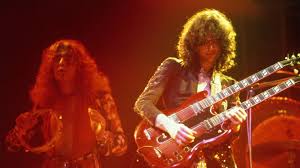
Black Magic is a false promise of power without cost and the idea of greedy wishes granted that lures the naïve into the darkness like flies to a spider's web.  Jimmy Page of the very popular rock band of the 70's, was said to practice both white and black magic.  Any study of the rock band's history shows a strong connection with black magic in the form of Aleister Crowley.  The group not only read his materials but purchased his castle to record several of their albums.  There were many evils that happened to the band including the death of Robert Plant's son (the nude boy in the film The Song Remains The Same) and the eventual motorcycle accident of John Bonham, their drummer, which ended his life as well as the band.  There was a popular rumor with other musicians of the day that when Marc Bolan of TRex snubbed the band, he shortly thereafter, died in a tragic car accident.  No one really knows, but after that accident there was no other "deep" rock band to stand in the way of Led Zepplin and the number one slots on the British and US music charts. 


Then there is the Eddie and the Hot Rods' curse.


In 1977, Essex rockers Eddie And The Hot Rod wrote a song that was partly inspired by Crowley’s famous motto: ‘Do what thou wilt is the whole of the law’. The band rewrote this as “Do Anything You Wanna Do”, a spirited ode to self-empowerment, and attached the lyrics to a perky pop tune that quickly reached the Top Ten. It was engineered by a young Steve Lillwhite, who recorded it at Island’s studio in Notting Hill.
 
In recognition of his contribution to the song’s genesis, the band decided to put Crowley on the cover of the single. But they also felt his glowering visage was not really in the spirit of the band, so manager Ed Hollis (brother of Talk Talk’s Mark) attached a slightly comical pair of Mickey Mouse ears to Crowley’s head.

Great cover, big mistake. According to rumour, this image soon came to the attention of Jimmy Page, a Crowley apostle who lived in the Crowley’s old house, had a vast collection of Crowley paraphernalia and was fascinated by the occult. Page had orchestrated the Crowley-influenced occult symbolism that adored Led Zeppelin’s fourth album, which incidentally was also record at Island Studios.
 
The band were told that Page placed a curse upon Eddie And The Hot Rods for their disrespectful treatment of the Great Beast. From that moment, the band were plagued by problems. They were dropped by their label, their manager became hooked on heroin and they never bothered the higher reaches of the chart again. From behind his Mickey Mouse ears and with the help of satanic rock royalty, Crowley had got his revenge. As bassist Paul Gray told me, ‘Weird shit happened after that. A lot of people said we shouldn’t have fucked about with Crowley.’


https://thebolditalic.com/timely-spells-to-cast-on-the-current-administration-2d91ebaffb8d

Aug 21, 2018


For the Greeks and Romans of the first century B.C., the term "Chaldean" had no meanings: It was the name of the inhabitants of Chaldea, a district southern Babylonia, and it was the title given to professional diviners who used the heavens to predict the future.  This second group got its name from the popular belief that horoscope casting was invented in ancient Mesopotamia.

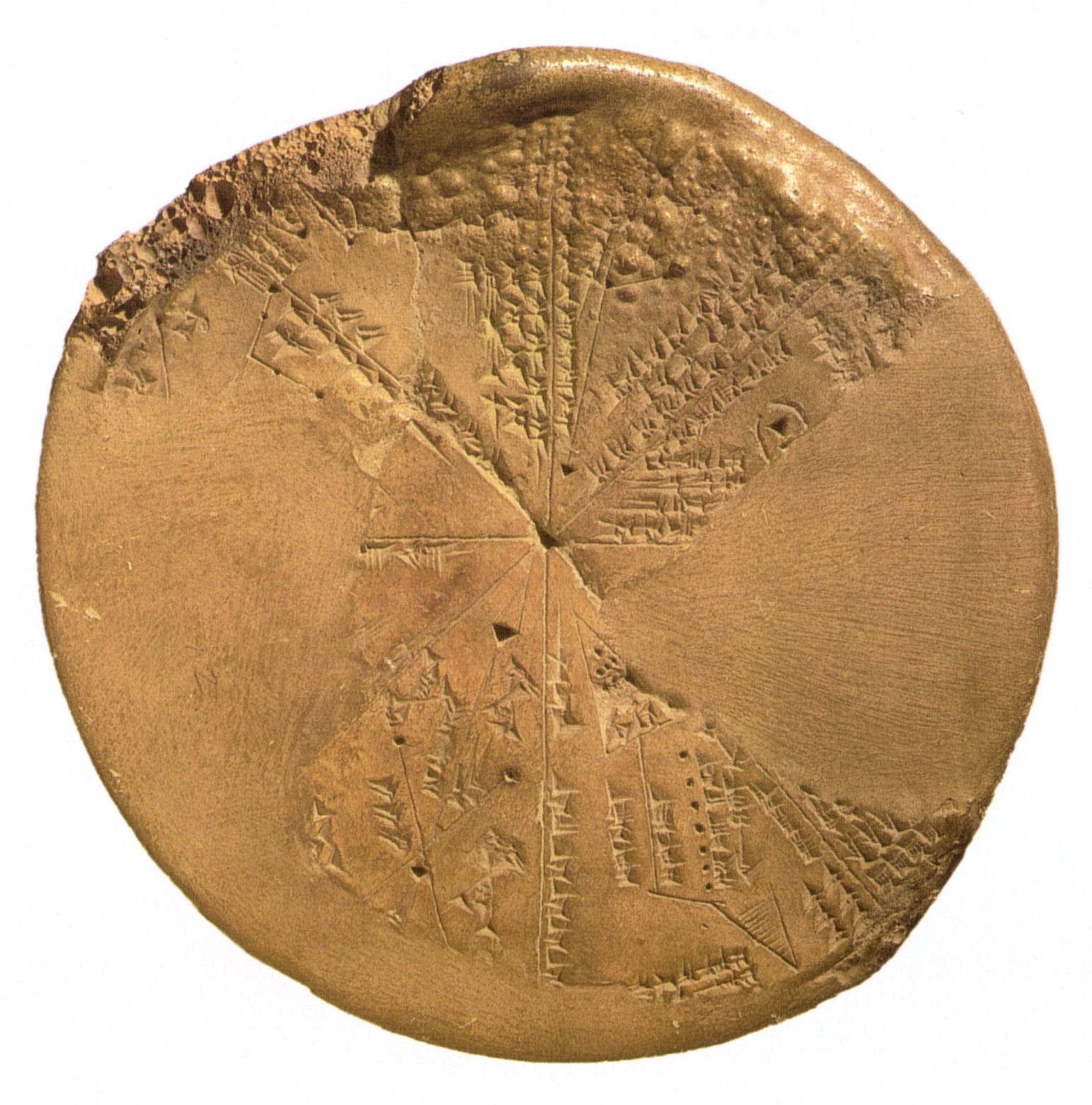
Although traditions of divination often appeal to ancient authorities for credibility, the Chaldean origins of astrology are no fiction.  Since the 1880s, about 30 ancient Babylonian cuneiform tablets containing horoscopes have surfaced.  The majority of these tests were first made accessible for study in Francesca Rochberg’s excellent 1998 volume, Babylonian Horoscopes.  Thanks to this publication, we now know that the horoscope was one of the last and —for better or worse—one of the most enduring contributions of ancient Mesopotamia to human culture.

The origins of Babylonian astrology can be traced back to the Old Babylonian period (early second millennium B.C.), when Royal diviners began interpreting the significance of celestial omens, such as eclipses.  But after the Persians conquered Mesopotamia in the mid-first millennium B.C., Babylonian astrologers started using the heavens to predict ordinary people’s fates.

There was nothing new in the idea of using a person’s birth date to foretell his future: A seventh-century B.C. omen series called Iqqur ipus used the month of birth for just this purpose.  There was a technical obstacle, however, to bringing the heavens into play.  How could ancient diviners do this when there was no assurance that an ominous occurrence could be seen on a particular person’s birth date for example, on rainy or cloudy days?  The Babylonians solved this problem by taking into account a combination of astronomical events that occurred before and after the target date, along with certain facts about the situation of the heavenly bodies on that date.

Where did their astronomical data come from?  In Against the Professors, the second-century A.D. Greek philosopher Sextus Empiricus offers us the fanciful picture of a Chaldean watching the sky, awaiting the sound of a gong signaling that a child has been born.  In reality, horoscopes were prepared well after the moment of birth, and there was no call for such precise timing.  Astrologers could turn to the archive at the Esagila Temple of Marduk, for instance, where Babylonian scientists had been keeping a continuous record of astronomical and meterological observations since at least the seventh century B.C.  Their so-called Astronomical Diaries seem to have been the source of much of the information in ancient Babylonian horoscopes.

All the Babylonian horoscope tablets, with a single early exception, employ zodiacal signs to specify the locations of the sun, moon and planets (Mercury, Venus, Mars, Jupiter and Saturn) on a person’s date of birth.  It had long been recognized that the moon and planets travel along a fixed belt among the stars, and that their positions could be expressed either in relation to certain bright stars in this so-called Path of the Moon or, more roughly, according to the constellation through which they were passing.  The zodiacal signs used in Babylonian horoscopes represented 12 equal divisions of this belt, and they were named for the constellations that more or less coincided with those divisions.

Thus the constellations called the Hired Man, the Bull of Heaven, the Great Twins, and the Crab gave their names to zodiacal signs corresponding to our Aries, Taurus, Gemini and Cancer.  To determine when a planet crossed from one zodiacal sign to the next, the observers of the Astronomical Diaries tracked its passage through the stars; for example, the star called the Rear Twin (our Eta Geminorum or Pollux) marked the boundary between the Great Twins and the Crab.  Each zodiacal sign was, in turn, comprised of 30 smaller units, called ki (our degrees), which could be used to pinpoint the location of heavenly bodies more precisely.


Most of the Babylonian horoscope tablets that have survived contain only the date of birth of a person and the relevant astronomical data.  Only a few tablets—mostly from Uruk—actually offer any kind of prophecy or interpretation:  “His days will be long” or “He will have sons” are typical predictions. These notes seem to have been derived mechanically by looking up a particular astronomical fact, say the moon’s position, in an omen list.  One must presume that the horoscope caster who inscribed the tablet also regaled his customer with stories that wove together, embellished and, if necessary, reconciled inconsistencies between the omens.

The Babylonian horoscope casters apparently left no literature or correspondence explaining how a horoscope worked.  We cannot say whether they, like their omen-watching predecessors, believed that the heavens expressed the personal intentions of the gods— though horoscopes death with periodic and predictable astronomical phenomena, properties not usually associated with divine whims.

When the Greeks first began studying Babylonian horoscope, in the first or second century B.C., they had no trouble interpreting the horoscope as a record of physical cause-and-effect relationships.  The heavenly bodies, revolving in complex orbits around the earth, were seen as agents of nature; their motions helped determine the interaction of elements on earth, including the birth and growth of human infants.

About 200 Greek horoscopes survive from antiquity, mostly in the form of papyri from Egypt.  The earliest ones date from the late first century B.C., just a few decades after the last known Babylonian horoscope.

Horoscopes astrology burst forth on the classical world at an opportune moment.  Methods of divination and magic were rapidly gaining popularity at the same time that theoretical astronomy was steadily advancing.  By building on principles laid out by the Babylonians, Greek astrologers could claim to satisfy practical human needs through modern, scientifically respectable methods.

Like their Babylonian predecessors, Ancient Greek horoscopes eschew interpretation, normally giving no more than the date and time of birth and a list of astronomical facts.  They focus tightly on the hour of birth, disregarding eclipses and other possible divine omens that take place well before or well after a person’s birth.

There are some striking differences between Ancient Greek and ancient Babylonian horoscopes.  Greek horoscopes list not only the basic zodiacal positions of the sun, the moon and the five planets; they also record the horoskopos or “hour-watcher”—the part of the zodiac that was rising on the eastern horizon at the moment of a person’ birth.  This element, which was not included by the Babylonians, is what gave the horoscope its name.  In addition, all of the astronomy in the Greek horoscope played no direct role in Greco-Roman astrology.

Extant Ancient Greek astrology textbooks reveal that Greek horoscope interpretations involved a much higher degree of mathermatical sophistication than anything in Mesopotamian divination.  Nevertheless, the intellectual heritage of astrology is clear.  Despite numerous changes and innovations over the centuries, modern horoscope would still be perfectly intelligible to a Greek of the time of the Antonines (the second century A.D.), and it would not be wholly foreign to a Babylonian of the time of Alexander the Great.
______________________________________________________________________________


On this day in ancient Rome, the Consualia harvest festival held in honor of Consus, the Earth god, took place.  There were sacrifices and offerings of the first fruits, followed by horse racing in the Circus Maxiums.  The annual festival of Heraclia was also held on this date in honor of the god Heracles and included sacrifices at his shrines.

Circus Maximus

Aug 20, 2018

a few thoughts on time


It may come as a surprise to learn that the idea of a Christian Era dates back no future than the sixth century—A.D.  It was a rather obscure Syrian monk named Dionysius Exiguus (Dennis the Little) who came up with it—and who miscalculated its “epoch” or starting point.  His example was followed in the seventh century by the invention of a Moslem Era dating from the Hegira, the flight of Mohammed from Mecca to Medina in 622 A.D.  Because the Moslem year is a lunar one and shorter than the solar year of the Christian calendar, as this book goes to press in 2002 A.D. the Moslem year has reached 1423 A.H. (Anno Hegirae), even though only 1,380 solar years have elapsed.  In the eight century A.D., the Jets followed suit with an era of their own based on the “year of creation,” which according to tradition occurred in 3760 B.C.  The Jewish year is a solar one, based on the moon but reconciled periodically with the solar year by means of leap-months, so its years keep pace with the Christian calendar.  In 2002 A.D., the Jewish year is calculated 3760 + 2002 +5726.

Thus, early in the Middle Ages, the three great monotheistic faith began dating their own eras, and these usages now dominate the globe.  But they were far from the first to introduce the idea of the era as such.  Like many of our most essential modern institutions, the concept of the era dates back before modern times, indeed before medieval and classical times, all the way to the ancient Near East, the best documented area of the world for half of its recorded history.  The story unfolded in two stages. 


Seleucid


The immediate model for the religious eras was the Seleucid Era, which was used in the Mediterranean world from before the rise of the Roman Empire to well after its fall.  It’s “epoch” was the (re-)conquest of Babylon by one of the successors of Alexander the Great, namely Seleucid I.  In 312 B.C.  Seleucid became the ruler of much of the Asian Near East, naming his son Antiochus I as co-regent late in his reign.  Antiochus (and his descendants) continued to date by the years of Seleucus’s reign even after the latter’s death, and thus was born the novel idea of the dynastic era.  It replaced the cumbersome system of starting a new era with the accession of each new king, which required memorizing the lengths of previous reigns (or written king lists) to calculate long-term contracts or to write history.  So useful was the new idea that it soon spread beyond the borders of the Seleucid kingdom.  Thus the dynastic Seleucid Era became a truly international era, sometimes known as the “Era of (all) the Greeks” (see the First Book of Maccabees 1:10).


But even the Seleucid Era had its limitations.  After its introduction, the development of astronomy proceeded apace, led by such figures as Hipparchus in the second century B.C. and Ptolemy in the second century A.D.  They required a system that went back before Alexander, and Ptolemy in particular provided one in the form of the “Era of Nabonassar.”  Named for the king who ascended the throne of Babylon in 747 B.C.  According to Berossos, a Babylonian priest writing in Greek in the third century B.C., Nabonassar was responsible for introducing a new historiography in Babylon.  The question is, did Nabonassar introduce the era named for him, or was it a construct of later historians and astronomers?  The fact that two other eras, both devised in the third century B.C., dated their epochs to the eighth century B.C. Supports the latter view.  One of these was the Olympic Era, which was counted beginning with the first Olympiad in 776 B.C.  The other was the Roman Era, dated “from the founding of Rome” (ab urbe condita), supposedly in 753 B.C.


But cuneiform records from Babylonia suggest otherwise.  They show that numerous calendric reforms as well as innovations in chronological historiography, or what may be termed “chronograph,” do in fact go back to King Nabonassar.  Among these are the so-called “Babylonian Chronicle,” a year-by-year record of major events affecting Babylonia and especially its priesthood; semi-annual “diaries” with observations of astronomical, meteorological and other natural phenomena (together with fluctuations in commodity prices), and occasionally historical events; and the regularization of the system of “intercalated new” of leap months—a system still largely adhered to by the Jewish calendar.  So the possibility cannot be entirely ruled out that Nabonassar meant to introduce a new era beginning with his accession. True, political events frustrated his plans, for his son lost his throne to the Assyrians.  But it is possible that astronomers continued to use the era, thus laying the groundwork for the later Seleucid Era and, ultimately, for our own era. 

So, boys-and-girls, you see, it never was the Year of Our Lord until somewhere around 600 CE (current error -- yes, I mean, error).

Babylonia

a poem:

Unfathomable Sea! whose waves are years,
Ocean of Time, whose waters of deep woe
Are brackish with the salt of human tears!
Thou shoreless flood, which in thy ebb and flow
Claspest the limits of mortality,
And sick of prey, yet howling on for more,
Vomitest thy wrecks on its inhospitable shore;
Treacherous in calm, and terrible in storm,
Who shall put forth on thee,
Unfathomable Sea? 


                         -- Percy Bysshe Shelley


the Shelley


_______________________________________________________

Aug 19, 2018

I am. Period.


 O, raise up thine eyes to eternal sky

In thy bondage strike out to be free

Hush the whispering voice of the infinite why

With "I am and I was and I ever will be."


So, what is being said here?  Easy, you are what you think.  Period.  Call it Positive Thinking, Mind Control, or The Secret, whatever you like!  Our lives come down to three phrases: I am, I was, I ever will be, and in the end you will be what you think you should be.  Simply put: nothing is impossible for the Conscious Mind, for the Conscious Mind controls the Subconscious Mind and the Subconscious Mind is all-powerful. 


Wow.  WTF.   Why go to church when you can read it here?


Every condition, circumstance, and manifestation of your life can be changed to suit your conscious desires.  The way is to "Know that fear is your enemy."

So, let's do away with the fear.  The fear of everything.  We will start by letting go of the notions we have about who we are, where we live, where we were born, what we have done, etc.  Forget all that, and instead meditate on I am a pure spirit cast into a human mold as a manifestation of divine intelligence, existing this little while on earth to help carry on the divine plan.  Being "pure spirit" we are part of the only intelligence there is, and all the power and understanding of this intelligence are ours to draw upon.

The Universal Mind that flows through us all knows no limitations and gives of itself according to need.  It is creating for us right now by reading these words and just, being.


Being "pure spirit," we are a part of God, a manifestation of the infinite.  In our earthy form we undergo a sense of isolation and personal responsibility which causes us doubt.  The doubt is from forcing on an existence instead of accepting an existence.  How do we "accept" this existence?  Simple, by stating, "I am" -- or "je suis" if you prefer a more poetic sounding call of arms.

I am.  

Period.  


___________________________________________________


On this day in ancient Rome, the ripening of the grapes and beginning of the wine-making season was celebrated with an agricultural festival known as the Vinalia Rustica.  The first greapes were broken off and offered to Jupiter and Venus.   

Aug 17, 2018

Find your personal Jesus, go inward lad.


a message from my spirit guide 

New Testament texts took centuries to write.  They were chosen amid an ongoing conflict between those who believed the orthodox texts represented Jesus' words and deeds, and the Gnostic Christians who believed that the orthodox writings had an inferior understanding of the true knowledge the Christ.


Theodosius
And so here's where the story begins.  Emperor Theodosius in A.D. 381 desired to condemn all versions of pagan and Gnostic belief, and so issued an order that only those bishops who would sincerely confess their belief in the equal divinity of the Father, Son, and Holy Spirit, and condemn all others, would return to their churches.  When this didn't work, Emperor Theodosius turned to brutality and extreme measures to eradicate the heresies of paganism, Gnosticism, and other spiritual beliefs and practices he thought undermined orthodox Christian beliefs.  His representatives traveled through Asia Minor, Egypt, and Syria to destroy temples and disband unorthodox religious groups.  The persecution drove some unorthodox groups underground and obliterated others, but accusations of heresy among groups of Gnostic Christians and pagans persisted.  Simply stated: If one didn't past the Holy Trinity Test, they didn't work or share into any of the community harvest.  Eventually they would be called heretics, witches, and devils.  Some of us hid alone for safety, others formed groups in caves, but most, pretended to believe.   We knew it was a lie.  We told our children the truth and the reason for acting; eventually, however, our grandchildren and great, grandchildren stopped passing down the truth of how the orthodox church stole our truth.   Fortunately, in our hearts we knew the truth.   And today, as the Catholic Priest are exposed for their perverted acts on children, and the Protestant faith are exposed for their hate in hypocrisy, we will find a way to return.  


Find your real Jesus today.  Go inwards, lad, go inwards. 

                                                                                                                              --Dr. T V Boogie


_________________________________________________________________________________


  This day marks the first of the nine days that Odin, the chief Aesir sky god, hung from the World Tree (Yggdrasil) in order to discover the meaning of the runes.  In ancient Rome, the festival of Diana, beloved goddess of the Moon, chastity, and hunting, was celebrated with feasting, mirth, and magic making. 


Diana


Eve of my Cancer Surgery - The Signs Are Important, Esoterically Speaking

Things are moving right along, my lung lobectomy is tomorrow. If it is successful, I take two steps forward, if not, I try something else.  ...

Thanks For Being!

Thanks For Being!